Case 04 · Design to code
Coral
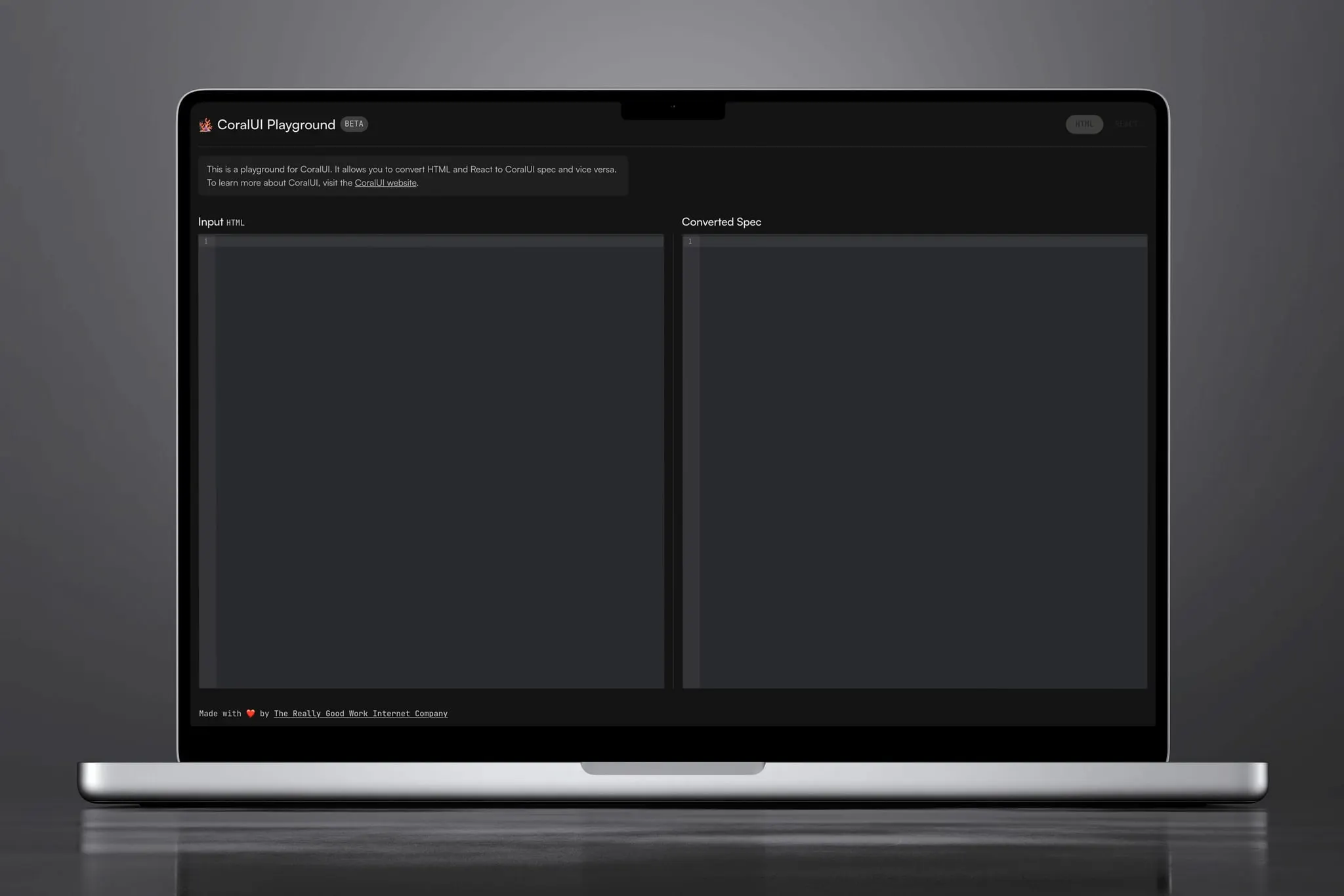
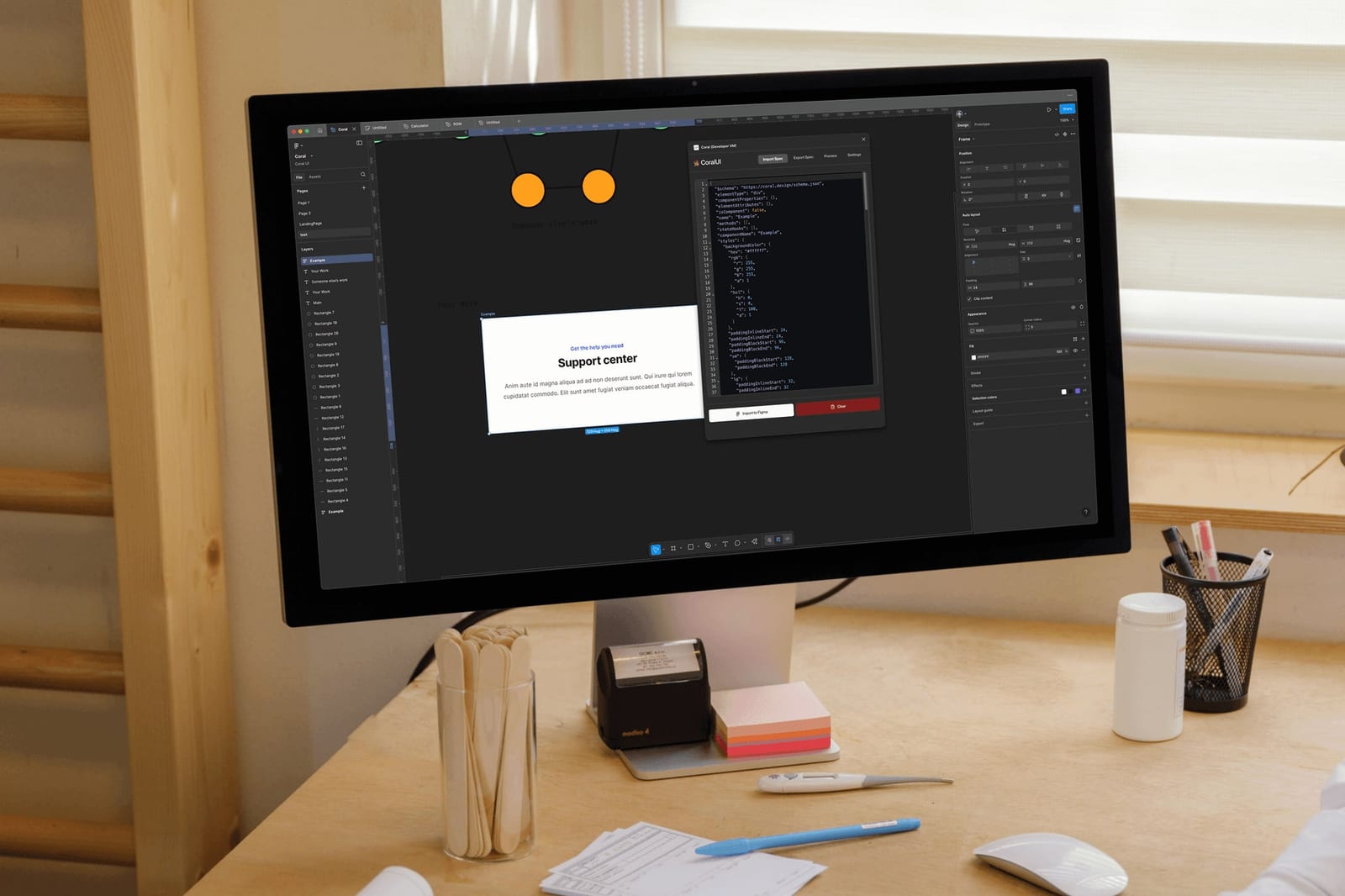
One format for a component, wherever it was made. Open a Figma design as HTML, edit it in code, send it back to Figma. AI has since changed the problem, so Coral is parked, but the idea of one shared source still drives my systems work.
- Role
- Design and engineering
- Year
- 2025
- Built with
- TypeScript, Zod, a CLI, a Figma plugin
- Link
- coralui.com ↗
01The problem
Design and code drift apart.
When design and code are two separate sources of truth, every change becomes two tickets and two reviews, and a QA pass to catch where they disagree. When the tools or frameworks change, the system gets rebuilt.
Most teams accept that as normal. I think it's a structural problem.
- Two sources of truthEvery change is made twice.
- Tool lock-inChange a tool or framework and the system is rebuilt.
- TranslationSpecs get interpreted, and consistency lives in people's heads.
02Where it started
Superfun, a Figma plugin.
In 2021, before Figma had Dev Mode or Code Connect, I built Superfun. It read a selected frame through Figma's API and wrote it out as React, Vue, Svelte or HTML, with styles as CSS or Tailwind.
The part that mattered was the middle. Superfun turned a design into one neutral description first, and wrote every framework from that. Figma has since built most of this in, but the idea stayed with me: put a shared description between design and code, and the gap gets small enough to automate.

03The idea
A component, described as data.
Coral is that description, made into a standard. A component's structure, styles, variants, props, events and tokens live in one JSON file. Figma, React, HTML and Vue are just different ways to read and write it.
{
  "name": "Button",
  "elementType": "button",
  "componentVariants": {
    "axes": [
      { "name": "intent",
        "values": ["primary", "secondary"] },
      { "name": "size",
        "values": ["sm", "md", "lg"] }
    ]
  },
  "props": {
    "label": { "type": "string", "required": true }
  },
  "textContent": { "$prop": "label" }
}
04Watch it work
From code to Figma and back.
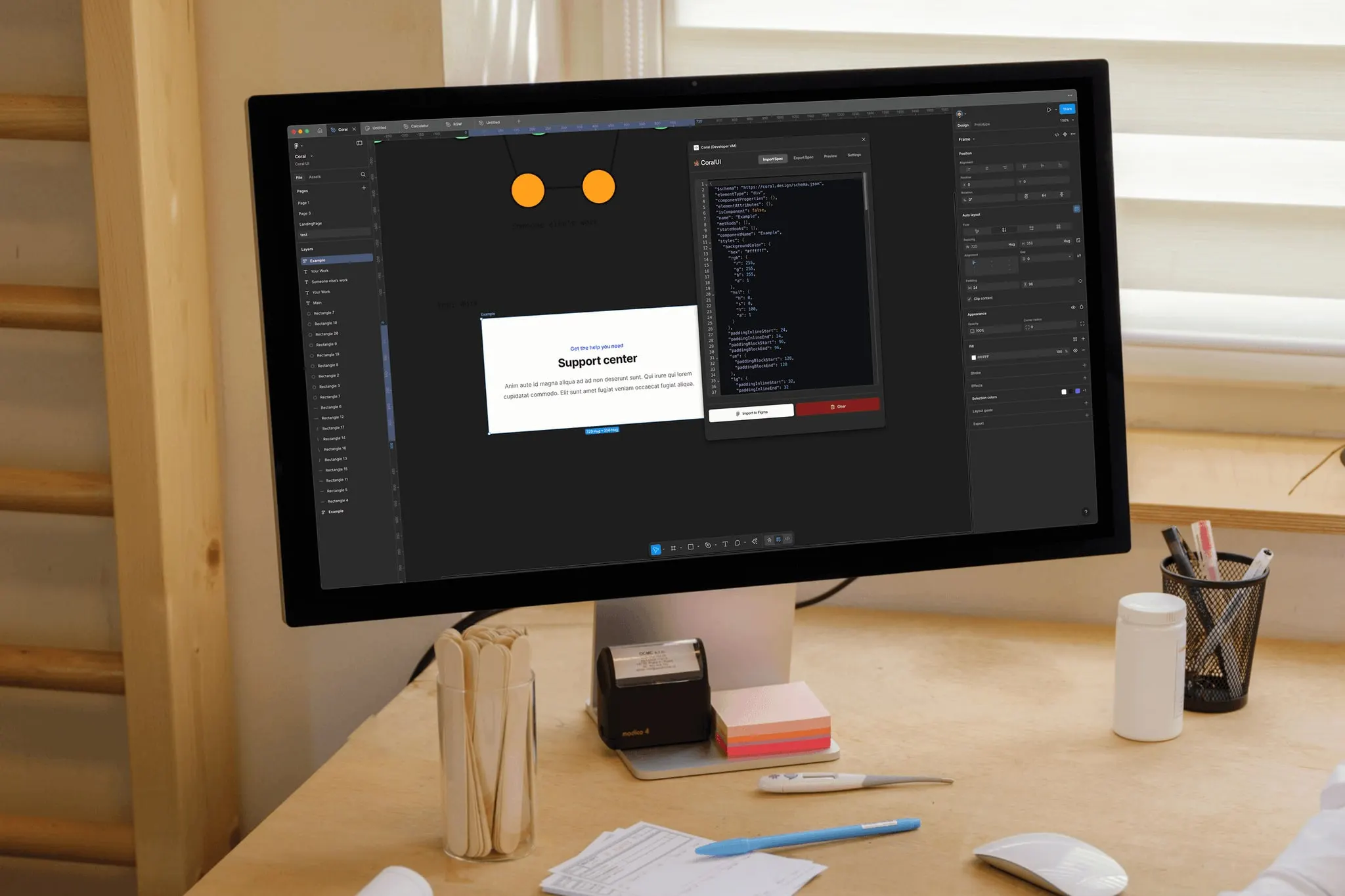
In this walkthrough I import a component from code, look at the spec Coral makes from it, bring it into Figma, and sync a change back.
05Where it is
Open source, in beta.
Coral is a set of small open-source packages: the core spec and CLI, generators for React and HTML, a React parser, and converters between CSS and Tailwind. The docs and code are public.