Case 03 · Mobile app
Mejuri
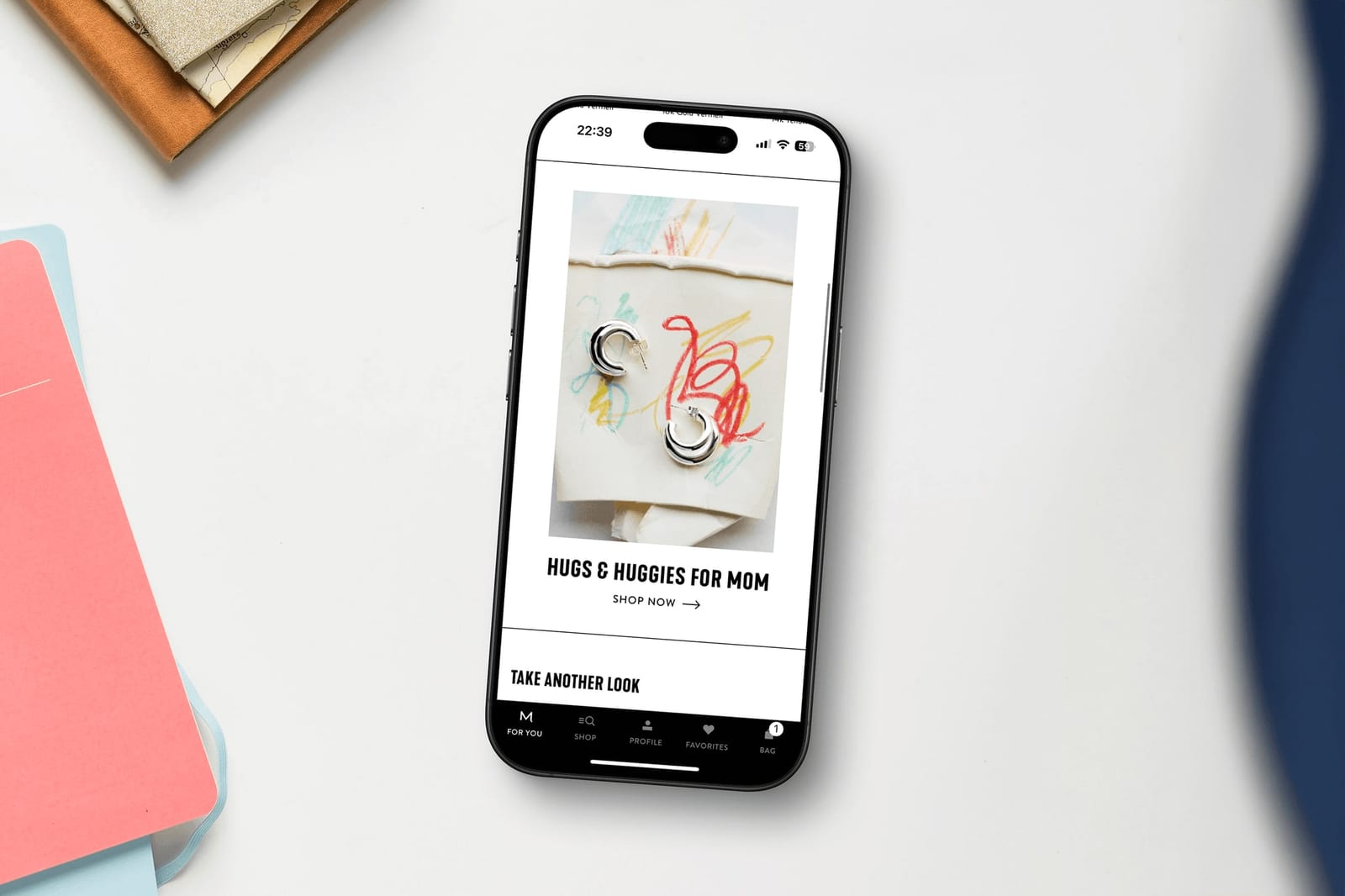
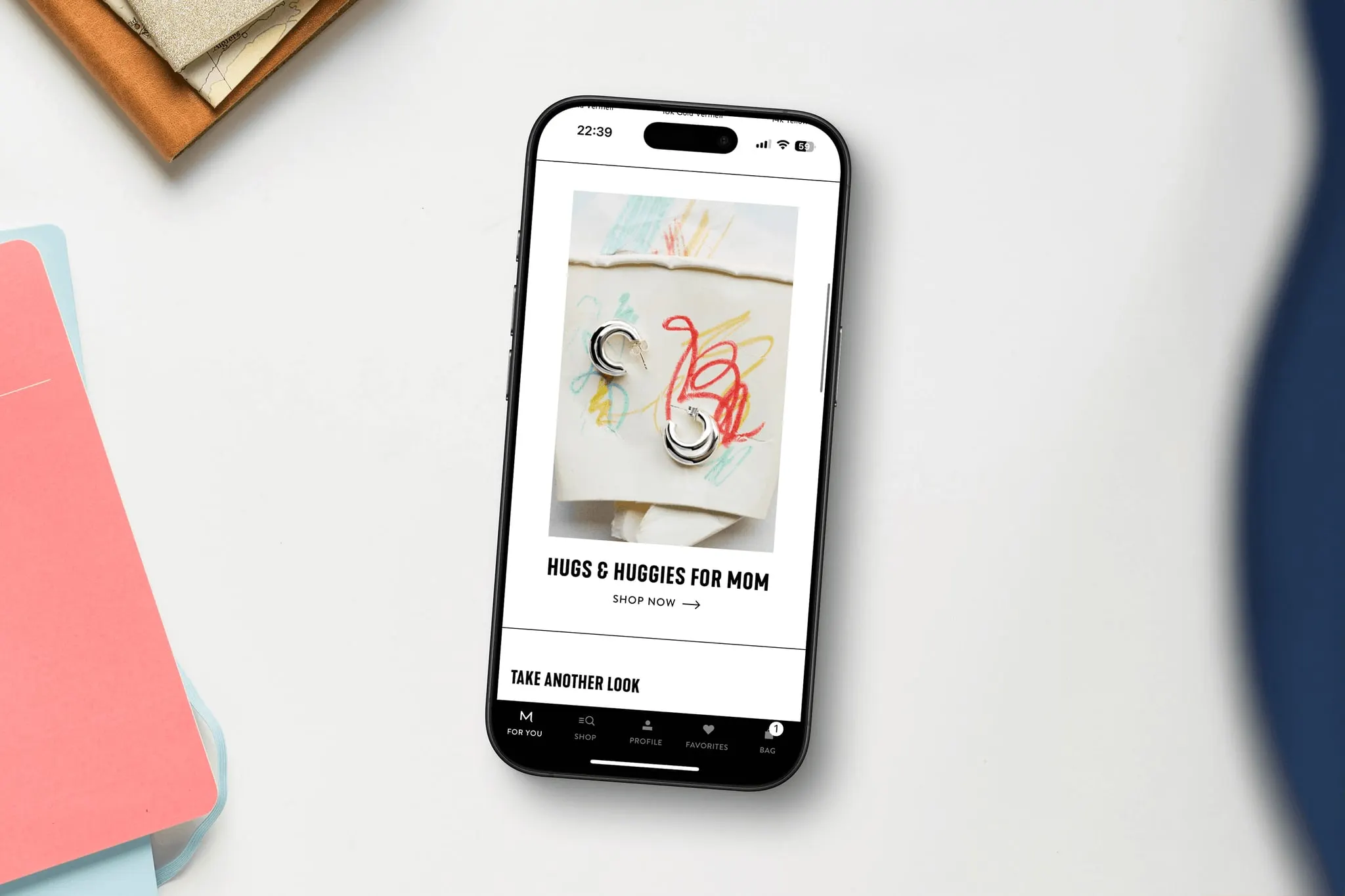
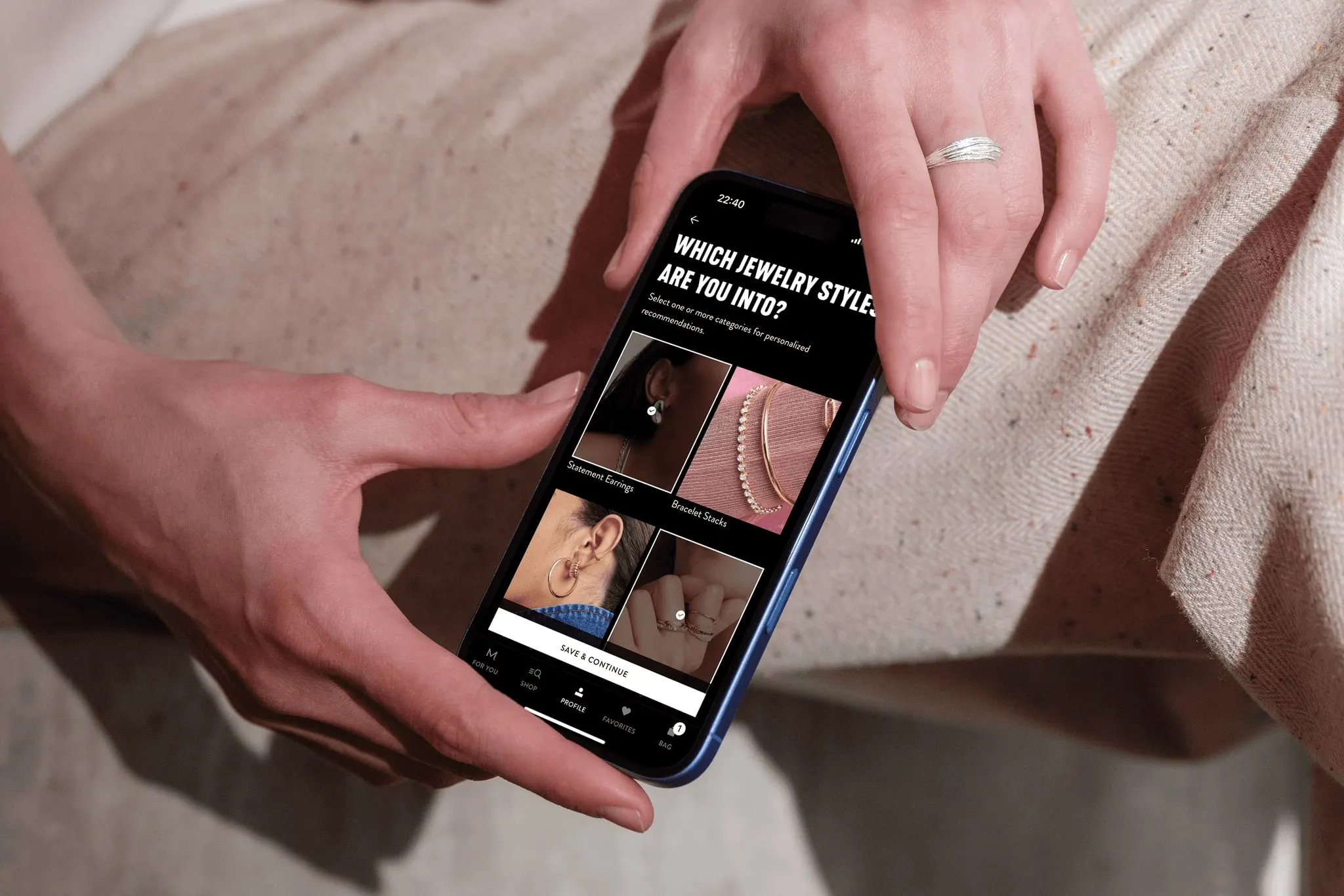
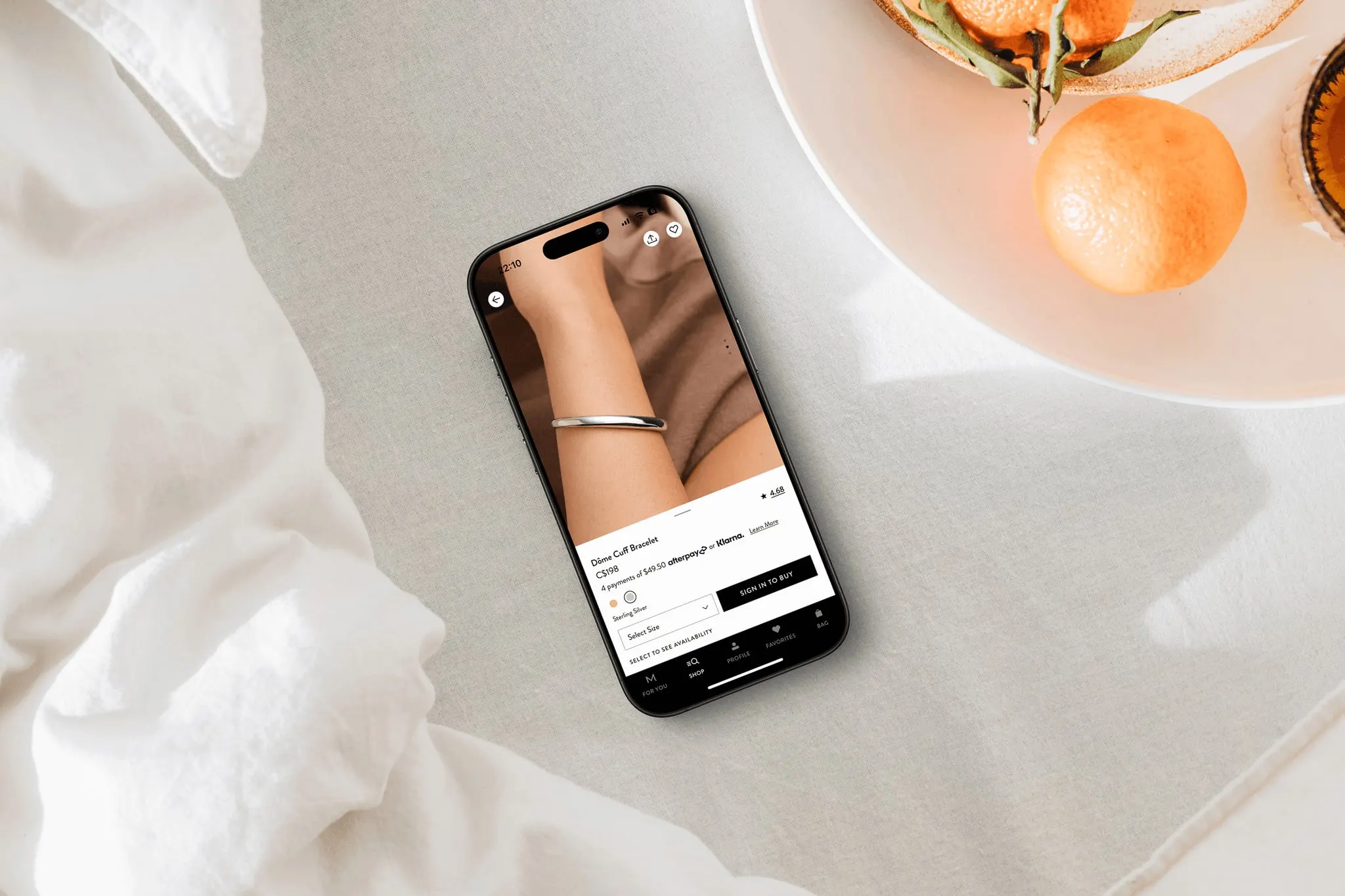
I built much of the product detail page and inner pages of Mejuri’s first iPhone app, plus the stories that ran in campaigns. Then I built a theming system so Black Friday, the holidays or any event could reskin the app from the same components, and designers could work with it directly. Handoff between design and engineering went night and day.
- Role
- Engineering contributor and collaborator
- Year
- 2024
- Built with
- Expo, React Native, Tailwind, TypeScript, Zod, React Query, Shopify, Sanity
- Status
- Launched on the App Store
01The brief
Mejuri's first iPhone app.
Mejuri sells fine jewellery to people who care how things look and feel. Their first iPhone app had to match the brand and feel personal from the first screen.
It was being built while the business underneath it changed. Products moved from Mejuri's in-house management system to Shopify. The website moved from Next.js to Remix. Content moved from Contentful to Sanity. I joined the team about three months before the first launch, as a contributor and collaborator: building experiences in the app, rewiring it to the new sources, and setting up how it was styled.
02Styling
One vocabulary for designers and engineers.
React Native doesn't speak CSS, so the usual way designers and engineers share styles didn't apply. I worked directly with Mejuri's design team in Figma to set up a process built on Tailwind's vocabulary: the same names for type, colour, spacing and sizing in the design files and in the code. A designer and an engineer could look at the same screen and say the same words.
The tooling underneath. React Native's styling engine reads plain values, not classes. So I built the layer that ingests styles written as Tailwind properties and turns them into values React Native can apply. Engineers wrote the vocabulary the designers used, and the engine got what it needed.
Theming and context. On top of that I introduced themes and contextual styling, so the app could change its look for a campaign or an event, or switch between light and dark, without touching the screens themselves.
03The migration
Rewiring the data underneath.
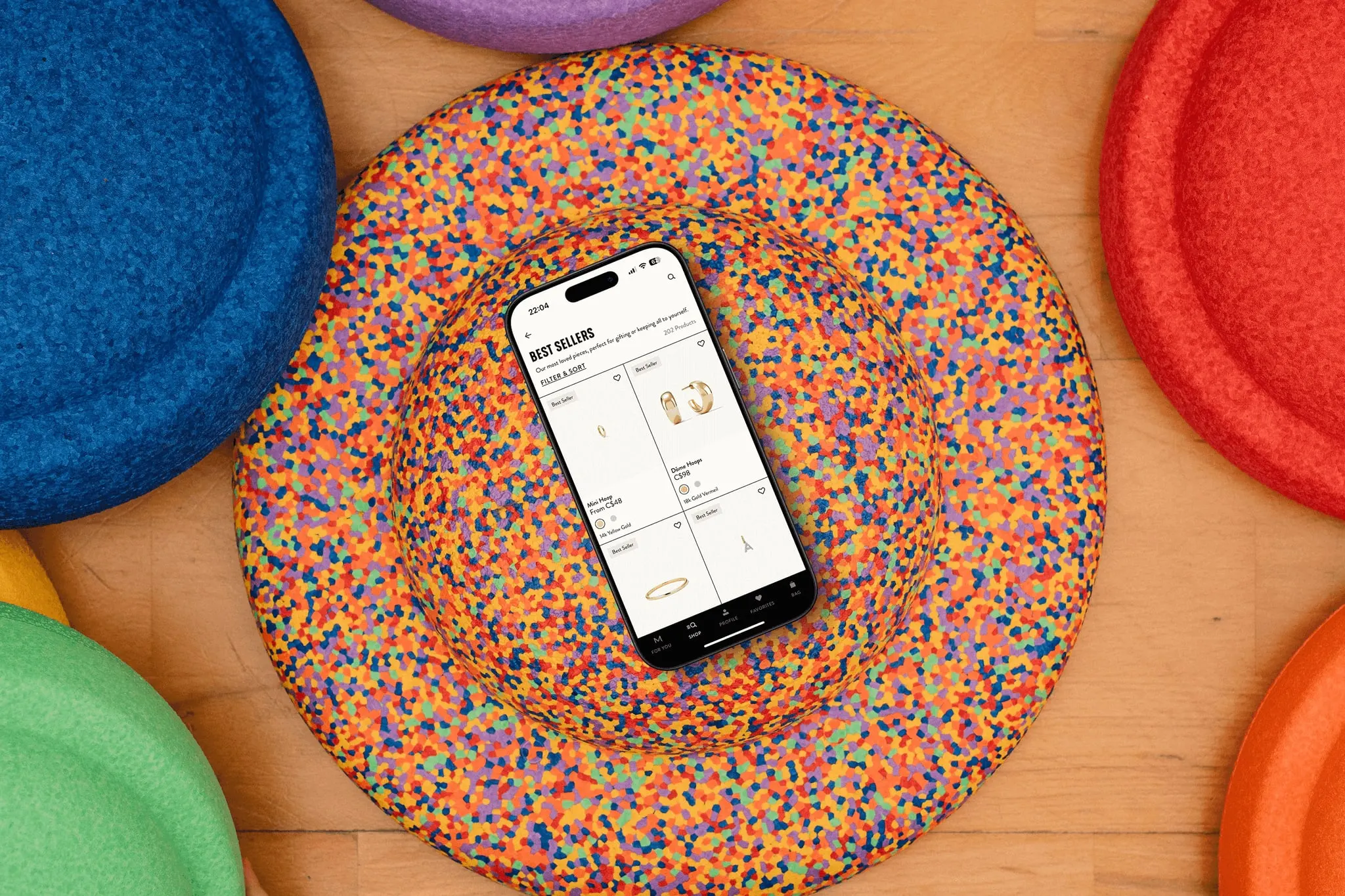
Moving to Shopify and Remix meant redoing how the app asked for data. Product, pricing and inventory now came from Shopify, and content from Sanity, so every query and every fetch was rewritten against the new sources.
TypeScript and Zod. Data is checked where it enters the app, so when a source changed shape mid-migration, it failed loudly in development instead of quietly breaking a screen.
React Query. The app fetches only what each screen needs, caches it and shares it, so it stays quick on a weak connection.
04Stories
Browsing a collection like a story.
Stories show a collection full-screen, tap to advance, and end in a shoppable edit of what you just saw.
05Sizing
Fit, answered on the product page.
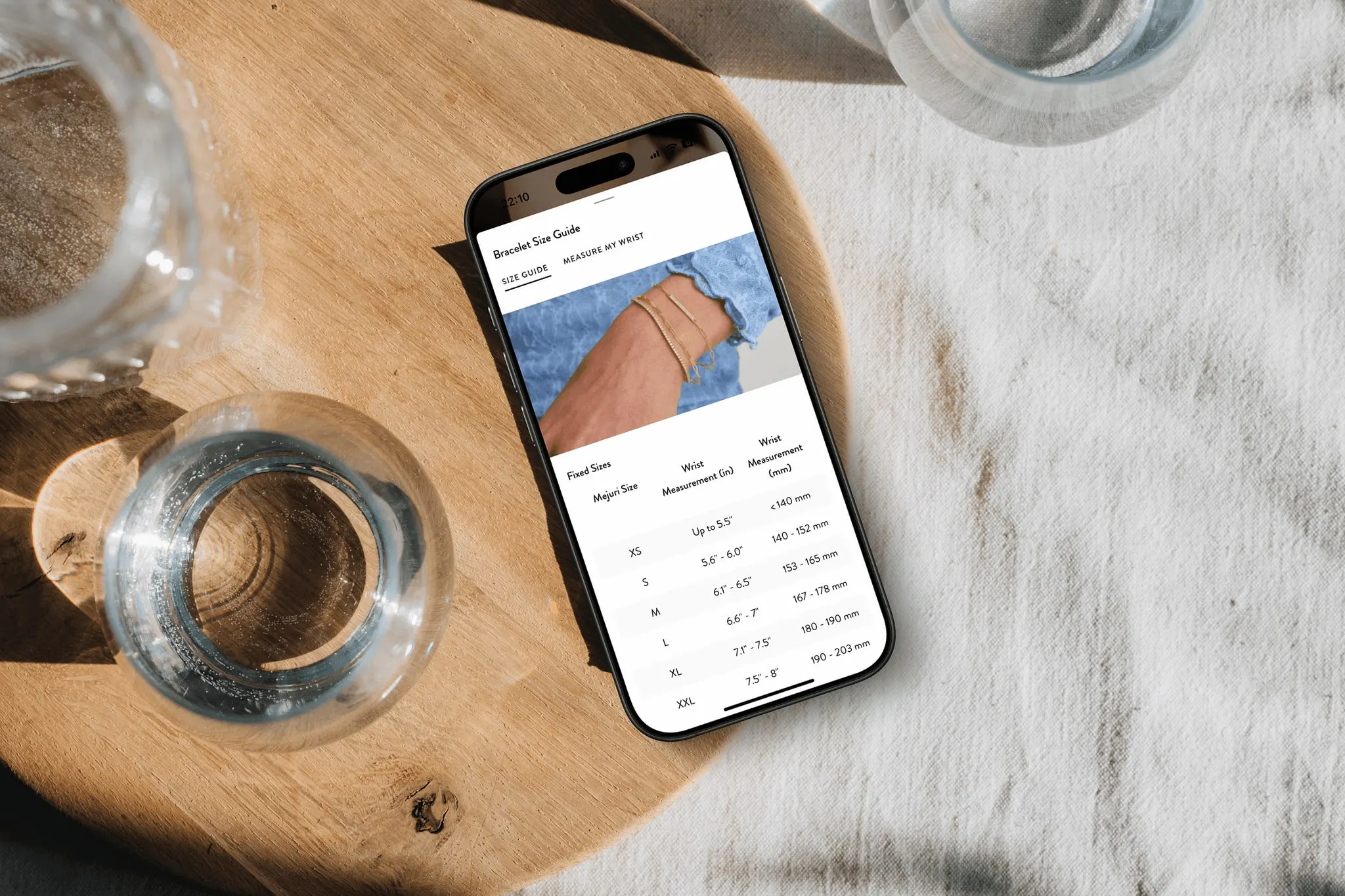
Every product page links to a guide for its category, with a size chart, a how-to for measuring at home, and how each length or size actually sits.
06Orders and returns
Orders, exchanges and returns.
Orders, exchanges, returns and refunds all live in one place, with each order's status and its history.